- 82839 39988
- groombloombypk@gmail.com
- House No 561, Sector 33B, Chandigarh, 160020

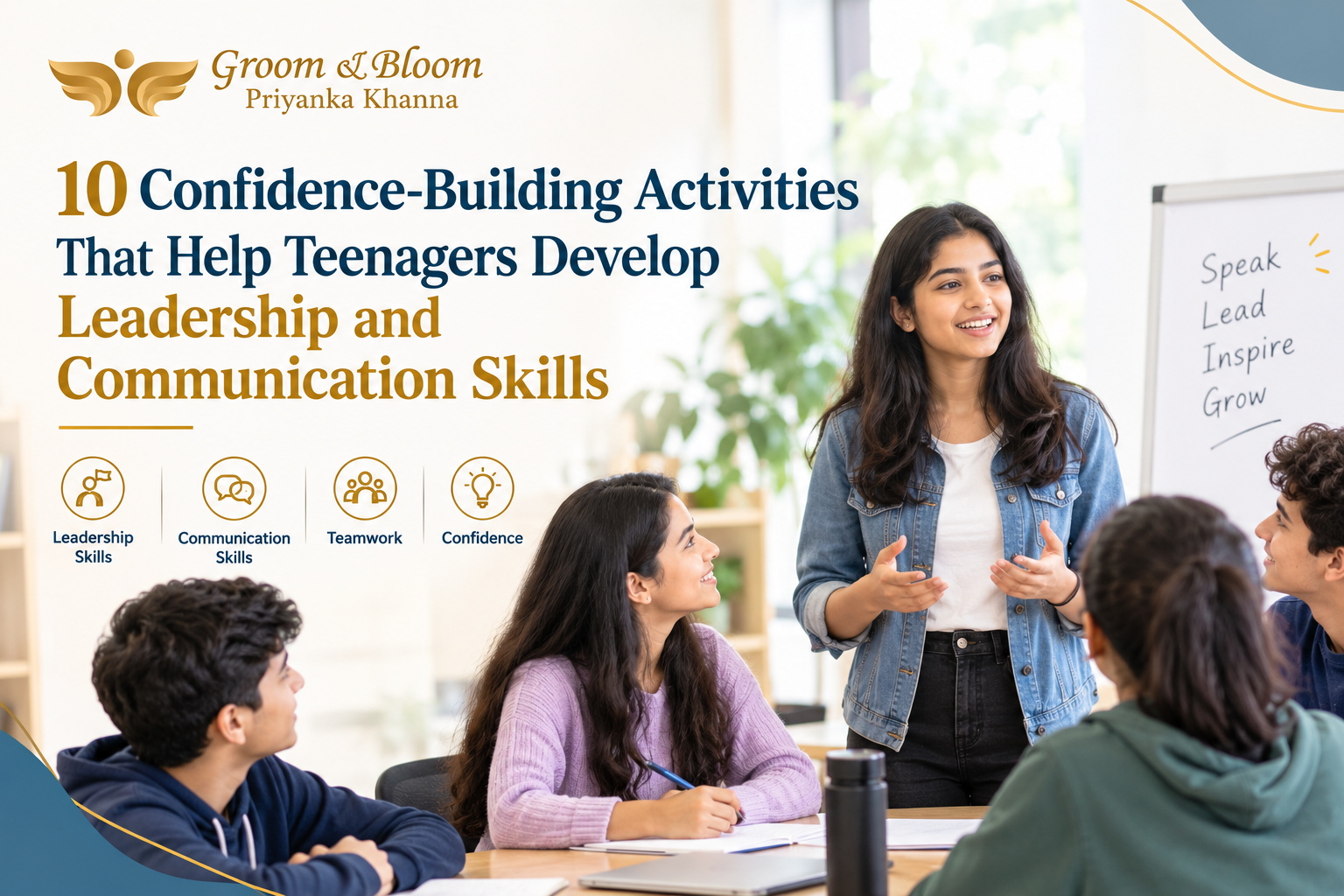
Teenage years are among the most formative stages of life. It is during this period that young people develop their personality, communication style, decision-making abilities, and self-confidence. While academic success is important, confidence often determines how effectively teenagers express themselves, build relationships, overcome challenges, and prepare for future opportunities.
Many teenagers struggle with public speaking, social anxiety, peer pressure, low self-esteem, or fear of failure. Confidence-building workshops provide a supportive environment where they can learn essential life skills through practical activities rather than traditional classroom instruction.
This article explores some of the most effective confidence-building activities that help teenagers become confident communicators, responsible leaders, and resilient individuals.
Confidence influences nearly every aspect of a teenager’s personal and academic life.
Confident teenagers are more likely to:
Rather than being an inborn trait, confidence is a skill that develops through practice, encouragement, and positive experiences.
Public speaking is one of the most effective ways to build confidence.
Teenagers are encouraged to speak on various topics before small groups, gradually progressing to larger audiences. This helps reduce stage fear while improving communication skills.
Benefits include:
Regular speaking practice helps teenagers become comfortable expressing their thoughts in different situations.
Participating in discussions teaches teenagers how to listen actively, present ideas logically, and respect different viewpoints.
Debates encourage critical thinking while improving confidence in expressing opinions.
Skills developed include:
These activities also prepare students for interviews, college discussions, and future workplace interactions.
Role-playing allows teenagers to practise handling everyday situations in a safe and supportive environment.
Scenarios may include:
Experiencing these situations builds confidence before they encounter similar challenges in real life.
Leadership activities encourage teenagers to take responsibility, make decisions, and motivate others.
Examples include:
These experiences help teenagers understand the value of accountability, teamwork, and initiative.
Confidence grows when teenagers learn to collaborate with others.
Interactive team-building activities help participants:
These activities also strengthen friendships and create a sense of belonging.
Many teenagers express themselves more confidently through creativity.
Confidence workshops often include:
Creative expression helps teenagers communicate emotions while reducing fear of judgment.
Setting and achieving small goals helps teenagers recognise their abilities and build self-belief.
Workshops teach participants how to:
Each accomplishment reinforces confidence and encourages continued growth.
Understanding emotions is an essential part of confidence.
Activities help teenagers develop:
Emotionally intelligent teenagers are often more resilient and better equipped to handle academic and social pressures.
Communication workshops include activities such as:
These exercises improve fluency, confidence, and clarity of expression while reducing hesitation in social and professional settings.
Confidence grows when teenagers recognise their strengths.
Many workshops conclude with guided reflection, where participants:
Constructive feedback helps teenagers develop a growth mindset rather than fearing mistakes.
A well-designed confidence-building program goes beyond communication and public speaking.
Participants often develop:
These life skills prepare teenagers for higher education, careers, and everyday challenges.
Confidence-building workshops are most effective when supported by positive reinforcement at home.
Parents can encourage confidence by:
A supportive home environment complements the skills learned during workshops.
When selecting a workshop, parents should look for programs that include:
The right workshop should focus on long-term personality development rather than temporary motivation.
Confidence is one of the greatest gifts parents can help their teenagers develop. Through activities such as public speaking, leadership challenges, role-playing, creative expression, emotional intelligence training, and team-building exercises, teenagers gain the skills needed to communicate effectively, lead with confidence, and navigate life’s challenges successfully.
At Groom & Bloom, our confidence-building workshops for teenagers combine experiential learning, communication training, leadership development, and personality enhancement in an engaging and supportive environment. Designed by experienced trainers, our programs help young learners become confident speakers, responsible leaders, and resilient individuals who are ready to thrive in school, college, and beyond.